 Fall 2026 schedules are available, register and save your spot today!
Courtesy Driving School
Teen Driver Education in Michigan
How it Works
Michigan has one of the best traffic safety records in the United States. The state’s rigorous standards to certify new drivers helps keep our roads safe for all.
The state uses a multi-step approach to licensing. This strategy equips young drivers with the skills, knowledge, and experience necessary to develop safe driving habits.
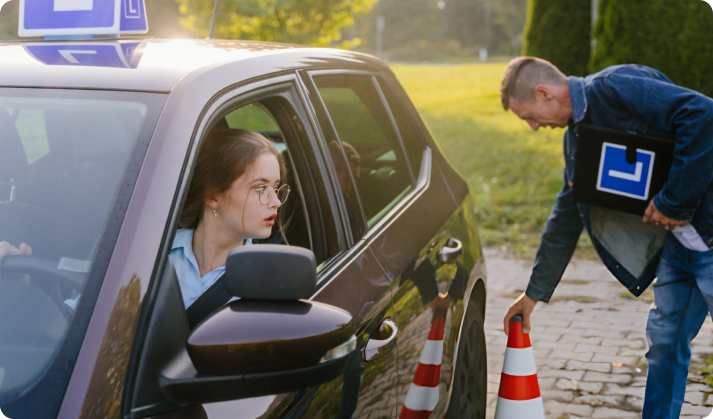
Teens: Getting your Driver’s License





Segment 1
Segment 1 is the first phase of Michigan’s required driver education program for teens older than 14 years and 8 months. The program consists of both classroom instruction and behind-the-wheel training.
Students are eligible for a Level 1 Learner’s License upon the completion of Segment 1 allowing them to drive with a licensed adult.
Classroom Instruction (24 hours of class):
The classroom portion covers a wide range of topics aimed at developing the student's understanding of safe driving practices. These topics include:

The rules of the road (signs, signals, lane markings)
Defensive driving techniques
The responsibilities and legal implications of being a licensed driver
Basic traffic laws
Students are required to pass a written knowledge test covering traffic signs, rules of the road, and safe driving practices. The test will be administered as part of the classroom instruction.
Behind-the-Wheel Training (6 hours of driving, 4 hours of observation):
Practical driving instruction. Students will practice driving skills under the supervision of a certified driving instructor. It will also include observational driving instruction. Student learning includes:
Vehicle control (steering, braking, accelerating)
Safe driving in various conditions (weather, nighttime, traffic)
Parking, merging, lane changes, and other essential maneuvers
How to handle potential road hazards
Students receive a Segment 1 Certificate of Completion following their successful completion of Segment 1.
Students are provided with a Segment 1 Certificate of Completion following their successful completion of Segment 1. This certificate, proof of identity, proof of residence, and a vision test can be exchanged at a Secretary of State’s office for a Level 1 Learner’s License.
Learner's License
Teens may exchange their Segment 1 Certificate of Completion, proof of identity, proof of residence, and a vision test at a Secretary of State's office for a Level 1 Learner's License.
A Level 1 Learner's License permits the student to drive when accompanied by a supervising licensed adult in the passenger seat.
Road Practice #1
Segment 2
Segment 2 is the second phase of Michigan’s required driver education program for teens. The course is exclusively a classroom based program and is available to students who have successfully competed Segment 1, held a Level 1 Learner’s License for no less than 3 months, and logged at least 30 hours of supervised driving.
Students are eligible to road test for a Level 2 Intermediate License upon the completion of Segment 2 if all other requirements have been met.
Classroom Instruction (6 hours of class):
Segment 2 focuses on building safe driving habits, understanding road safety, and enhancing driving skills through a wide variety of covered topics including.
Teen driving statistics and risks
Defensive driving techniques
Proper vehicle maintenance
Peer influence and distractions
Students are required to pass a written knowledge test covering discussed program content. The test will be administered as part of the course.
Students receive a Segment 2 Certificate following their successful completion of Segment 2.
Road Practice #2
Teens are again required to practice their on-road techniques with a licensed adult driver prior to road testing for a Level 2 Intermediate License.
The state requires students to complete an additional 20 hours (50 total hours) of supervised driving hours including 8 hours at night (10 total hours). These practice hours can occur prior, concurrent, or following the completion of Segment 2. The hours must be logged and submitted at the time of the road test.
Road Test
Teens eligible for a road test include those who have successfully passed Segment 2, held their Level 1 Learner’s License for at least 6 months, and completed 50 hours of logged driving time. The road test is comprised of two parts including basic control skills test and on-road driving test. Please review the Driving Skills Test Study Guide prior to your appointment to help you prepare.
Basic Control Skills:
This portion of the test involves an evaluation of the student’s ability to demonstrate successful control of a motor vehicle. The various techniques tested include parallel parking, stopping, and reversing.
On-road Driving:
The second part of the road test assesses a student’s ability to drive in a variety of traffic situations including on residential streets and main roadways. It also measures the student’s ability to drive safely and obey all traffic laws.
Intermediate License
Teens successfully passing the road test will be granted their Level 2 Intermediate License. A visit to the Secretary of State’s Office is not necessary. A letter will be mailed confirming their advancement to the Level 2 Intermediate License. They will not receive a new license card.
A Level 2 Intermediate License allows for independent driving between 5AM and 10PM. Only one passenger under 21 can be in the vehicle with the exception of immediate family members. Outside of these hours, a supervising licensed adult must be in the passenger seat.
Full Driver's License
Teens will be automatically graduated to a Full Driver’s License when eligible.
Teens holding a Level 2 Intermediate License for at least 6 months, are at least 17 years of age, and have had 12 consecutive months without any violations or at fault crashes will be mailed a notification of advancement from the Secretary of State’s Office.
A Level 3 Full Driver’s License removes all driving restrictions with full state driving privileges granted.